



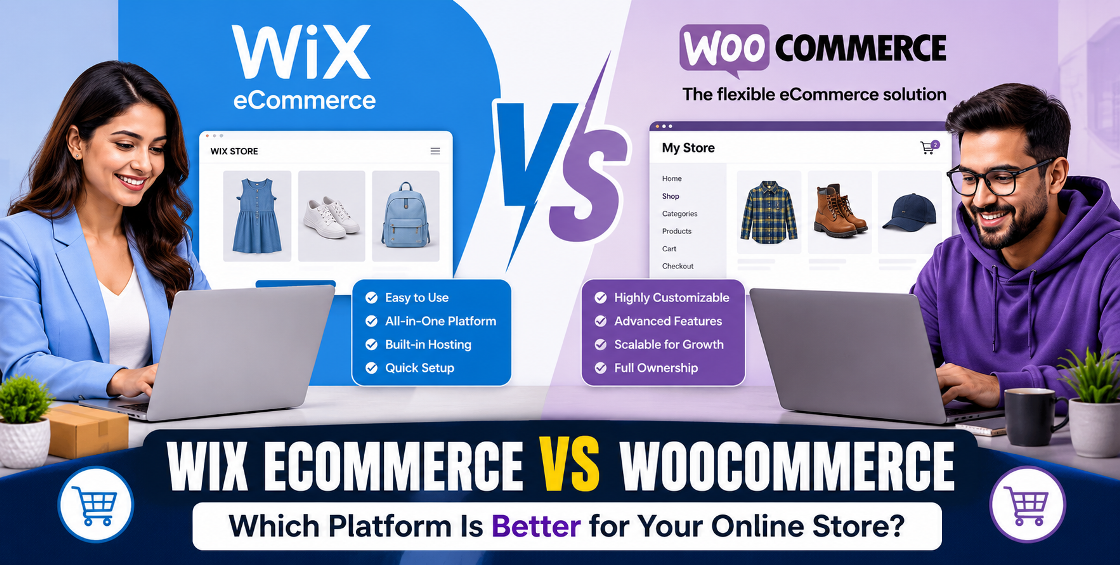
Wix eCommerce vs WooCommerce: Which Platform Is Better for Growing Online Stores?
Uploading a dozen products into an online store is straightforward. The real test begins when your catalog expands to thousands of SKUs, seasonal collections, multiple product variants, and listings across different sales channels.
We've seen retailers start with a platform that felt simple during launch but later struggle with inventory updates, duplicate product data, inconsistent categories, and time-consuming catalog maintenance. Choosing an ecommerce platform isn't only about how attractive your storefront looks—it also affects how efficiently your business operates behind the scenes.
If you're comparing Wix eCommerce vs WooCommerce, this article walks through the differences that matter once your business starts growing.
Wix eCommerce vs WooCommerce at a Glance
| Feature | Wix eCommerce | WooCommerce |
|---|---|---|
| Setup | Beginner-friendly | Requires WordPress setup |
| Customization | Moderate | Extensive |
| Hosting | Included | Self-hosted |
| SEO | Strong built-in tools | Excellent with plugins |
| Scalability | Best for small to medium stores | Suitable for businesses of all sizes |
| Maintenance | Minimal | User-managed |
| Flexibility | Limited by platform | Highly flexible |
| Development | Little technical knowledge needed | Technical knowledge often required |
The biggest distinction is simple:
Wix provides an all-in-one managed experience, while WooCommerce offers greater control in exchange for more responsibility.
Ease of Setup
For first-time store owners, Wix has one of the smoothest onboarding experiences available.
After selecting a template, users can:
- Add products
- Configure payments
- Set shipping rules
- Publish a website
without touching code or server settings.
WooCommerce follows a different path.
Since it operates as a WordPress plugin, store owners first need:
- Web hosting
- Domain configuration
- WordPress installation
- Theme setup
- Plugin management
Although the installation wizard simplifies many tasks, there are still more moving parts compared to Wix.
For entrepreneurs launching a small online business, Wix generally gets a store online faster.
Product Catalog Management
Catalog management often determines how much time a business spends on daily operations.
Imagine managing:
- 18 product categories
- 12,000 SKUs
- Multiple product images
- Color variants
- Size combinations
- Inventory updates every week
This is where operational workflows become more important than design.
WooCommerce offers greater flexibility for:
- Bulk product imports
- CSV uploads
- Custom attributes
- Product variations
- Third-party inventory tools
- ERP integrations
Wix has steadily improved its catalog management capabilities and works well for businesses with relatively straightforward product ranges. However, highly customized product structures or advanced automation typically require workarounds or specialized apps.
At India Data Entry Services, we've supported retailers maintaining large catalogs across multiple ecommerce platforms. A common pattern is that businesses with rapidly expanding inventories often outgrow simpler catalog structures and begin looking for more customizable workflows.
Design and Customization
Both platforms provide professionally designed templates, but they differ significantly in flexibility.
Wix
Wix focuses on visual editing.
Users can:
- Drag and drop elements
- Edit layouts visually
- Modify pages without coding
This approach appeals to business owners who want quick changes without involving developers.
WooCommerce
WooCommerce inherits WordPress's flexibility.
Developers can customize almost every aspect of the website, including:
- Checkout process
- Product pages
- Customer accounts
- Search functionality
- Custom product filters
- Membership systems
If your business expects unique workflows or advanced ecommerce functionality, WooCommerce provides considerably more room for customization.
SEO Capabilities
Organic traffic remains one of the most cost-effective acquisition channels for ecommerce businesses.
Both platforms support essential SEO features such as:
- Custom URLs
- Meta titles
- Meta descriptions
- Image optimization
- Structured navigation
WooCommerce gains an advantage because of the broader WordPress ecosystem.
Users can implement advanced SEO strategies using plugins that provide:
- Schema markup
- Internal linking suggestions
- XML sitemaps
- Content optimization
- Redirect management
- Advanced indexing controls
Wix has made substantial improvements in SEO over recent years and is fully capable of ranking well when technical fundamentals are handled correctly. For businesses with more complex content strategies, however, WooCommerce generally offers greater flexibility.
Performance and Scalability
Growth changes the demands placed on an ecommerce website.
A store with:
- 300 products
- 100 monthly orders
has very different requirements from one handling:
- 40,000 products
- Daily inventory updates
- Marketplace synchronization
- International shipping
- Thousands of monthly visitors
Wix manages hosting, updates, and infrastructure, making performance easier for business owners to manage.
WooCommerce performance depends largely on:
- Hosting quality
- Database optimization
- Image compression
- Caching
- Plugin selection
Well-optimized WooCommerce stores can scale impressively, but they require ongoing technical oversight.
Pricing Comparison
Pricing comparisons are rarely straightforward because the platforms follow different models.
Wix Costs
Typical expenses include:
- Monthly subscription
- Domain renewal
- Premium apps (optional)
- Payment processing fees
Costs remain predictable because hosting is included.
WooCommerce Costs
The core plugin is free, but businesses usually budget for:
- Hosting
- Domain
- Premium themes
- Paid plugins
- Maintenance
- Security tools
- Developer support (if needed)
For smaller stores, Wix often offers a simpler cost structure. As businesses grow and require custom functionality, WooCommerce's flexibility may justify its broader range of expenses.
Integrations and Marketplace Selling
Many retailers don't sell exclusively through their website.
Products may also appear on:
- Amazon
- eBay
- Etsy
- Google Shopping
WooCommerce benefits from a large ecosystem of extensions that connect with accounting software, shipping providers, CRM systems, marketing automation tools, and inventory platforms.
Wix supports many popular integrations through its App Market, though businesses with specialized operational requirements may find fewer options than WooCommerce provides.
Security and Maintenance
Security responsibilities differ significantly.
Wix
- Security updates
- Hosting
- SSL certificates
- Infrastructure
- Platform maintenance
Users spend less time handling technical administration.
WooCommerce
- Plugin updates
- Theme updates
- Backups
- Hosting security
- Malware protection
- Performance monitoring
Some businesses appreciate this control, while others prefer a managed environment that reduces ongoing maintenance.
Which Businesses Should Choose Wix?
Wix is often a practical choice if you:
- Are launching your first online store.
- Prefer an all-in-one solution.
- Have a modest product catalog.
- Don't want to manage hosting or updates.
- Need a professional-looking store quickly.
- Have limited technical resources.
Its simplicity allows business owners to focus on products and customers rather than website administration.
Which Businesses Should Choose WooCommerce?
WooCommerce is generally better suited for businesses that:
- Expect rapid catalog growth.
- Require custom product configurations.
- Need advanced SEO capabilities.
- Want full ownership of their website.
- Plan to integrate with external business systems.
- Sell across multiple marketplaces with complex workflows.
The platform offers more freedom but also requires greater technical involvement.
Common Migration Mistakes
Businesses changing ecommerce platforms often underestimate the operational work involved.
Some of the most frequent issues include:
Losing SEO Value
Changing URLs without proper redirects can reduce organic visibility.
Inconsistent Product Data
Missing attributes, duplicate listings, or incomplete descriptions create customer confusion.
Broken Category Structures
Poor planning often results in difficult site navigation after migration.
Image Organization Problems
Large product catalogs frequently contain inconsistent filenames, duplicate assets, or missing alternative text.
Ignoring Data Cleanup
Migrating outdated products and inaccurate inventory only transfers existing problems into a new system.
A structured migration plan that includes catalog auditing, URL mapping, product validation, and post-launch testing can prevent many of these setbacks.
Final Thoughts
There isn't a universal winner in the Wix eCommerce vs WooCommerce debate because the better platform depends on where your business is today—and where you expect it to be in the next few years.
If speed, simplicity, and minimal maintenance are your priorities, Wix offers an approachable path to launching an online store.
If your roadmap includes a growing product catalog, advanced customization, content-driven SEO, and deeper integrations, WooCommerce provides the flexibility to support those ambitions, provided you're prepared for the added management that comes with it.
Rather than focusing only on launch-day convenience, consider the everyday tasks your team will perform six months or two years from now. Catalog updates, inventory synchronization, content management, and marketplace expansion often have a greater impact on operational success than the initial setup process.
Frequently Asked Questions
Is Wix better than WooCommerce for beginners?
Yes. Wix is generally easier for beginners because hosting, security, and maintenance are included, allowing users to launch a store without managing technical infrastructure.
Which platform is better for SEO?
Both platforms support strong SEO practices. WooCommerce offers more advanced customization through the WordPress ecosystem, while Wix provides solid built-in SEO tools suitable for many online stores.
Can I migrate from Wix to WooCommerce?
Yes. Many businesses move from Wix to WooCommerce as their catalog size, customization needs, or integration requirements increase. Careful planning helps preserve product data and search rankings.
Which platform handles large product catalogs better?
WooCommerce is typically better suited for large and complex product catalogs due to its flexibility, bulk import capabilities, and extensive integration options.
Is WooCommerce cheaper than Wix?
It depends on your setup. WooCommerce itself is free, but hosting, premium plugins, themes, and maintenance can increase overall costs. Wix offers more predictable pricing through subscription plans.
CTA
Selecting an ecommerce platform is only one part of building a successful online store. Maintaining accurate product data, consistent category structures, optimized listings, and synchronized catalogs becomes increasingly important as your inventory grows.
At India Data Entry Services, our team has supported businesses managing everything from routine product uploads to large-scale catalog maintenance across ecommerce platforms and online marketplaces. Whether you're launching a new store or planning a migration, well-organized product data can save significant time and reduce costly operational errors.